If you’ve shopped for luxury vinyl plank (LVP) or luxury vinyl tile (LVT), you’ve seen the specs: 6 mil, 12 mil, 20 mil, even 30 mil. It’s easy to assume a bigger number just means a thicker, better floor — but the wear layer measures something very specific, and getting it wrong is one of the most common (and costly) mistakes homeowners make when choosing vinyl flooring. Here’s what the number actually means, and how to pick the right one for your space.
What Is a Wear Layer?
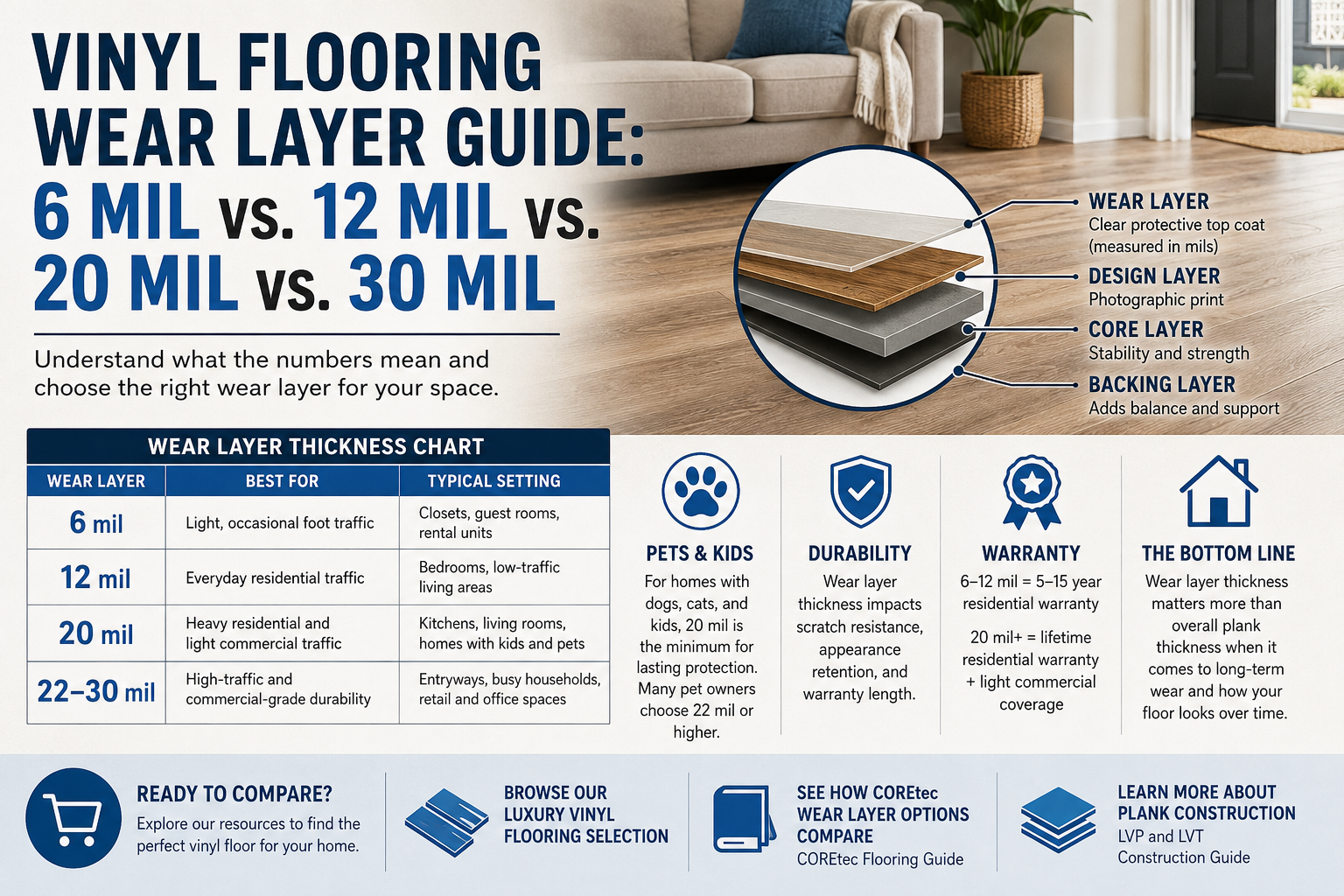
The wear layer is the clear, protective top coat applied over the printed design layer of a vinyl plank. It’s what actually takes the abuse — foot traffic, dragged furniture, pet claws, grit tracked in from outside — so the photographic wood or stone pattern underneath stays looking new. Once a wear layer is scuffed through, the print layer beneath it is exposed, and that’s when a floor starts to look worn out.
Wear Layer vs. Overall Thickness: Mil vs. Millimeters
This is where most of the confusion happens. A mil is a unit of measurement equal to one-thousandth of an inch (0.001″), and it only measures the clear wear layer on top. Millimeters (mm) measure the plank’s total thickness — wear layer, printed design layer, core, and backing combined.
That means a plank’s total thickness and its wear layer thickness are two separate specs, and one doesn’t guarantee the other. You can find a thick 8mm plank with a thin 6 mil wear layer, and a thinner 5mm plank with a much more protective 20 mil wear layer. If durability against scratches and wear is your priority, the wear layer rating matters more than the overall plank thickness.
Wear Layer Thickness Chart: 6, 12, 20, and 30 Mil Compared
| Wear Layer |
Best For |
Typical Setting |
| 6 mil |
Light, occasional foot traffic |
Closets, guest rooms, rental units |
| 12 mil |
Everyday residential traffic |
Bedrooms, low-traffic living areas |
| 20 mil |
Heavy residential and light commercial traffic |
Kitchens, living rooms, homes with kids and pets |
| 22–30 mil |
High-traffic and commercial-grade durability |
Entryways, busy households, retail and office spaces |
Most manufacturers treat 20 mil as the point where a residential floor can also carry a light commercial warranty — it’s the benchmark a lot of shoppers land on because it balances price and long-term durability without paying for more protection than a typical home needs.
Choosing a Wear Layer for Pets, Kids, and High-Traffic Homes
A 6 or 12 mil wear layer isn’t a poor product — it’s simply built for lighter use. In a low-traffic guest room, it can perform just fine for years. But claws, grit, and the constant motion of an active household wear through a thin protective layer much faster than in a room that sees light use. For homes with dogs, cats, or kids, 20 mil is generally considered the minimum for lasting protection, and many pet owners choose 22 mil or higher for entryways and main living spaces where scratching and heavy foot traffic are a daily reality.
How Long Does a Wear Layer Last?
Wear layer thickness is one of the biggest factors behind a manufacturer’s warranty length — which is why thin 6–12 mil products often carry residential-only warranties of 5–15 years, while 20 mil and higher products frequently carry lifetime residential warranties and multi-year light commercial coverage. The wear layer doesn’t determine how long the core itself lasts, but it does determine how long the floor keeps looking new before the surface starts to show its age.
Frequently Asked Questions
What does “mil” mean in flooring?
A mil is a unit of measurement equal to one-thousandth of an inch (0.001″). In flooring, it refers specifically to the thickness of the clear protective wear layer on top of a vinyl plank — not the plank’s overall thickness, which is measured in millimeters.
What is a good wear layer for vinyl flooring?
For most homes, a 20 mil wear layer is considered the standard for lasting durability, especially in kitchens, living rooms, and other high-traffic areas. Lighter 6–12 mil options can work well in low-traffic spaces like closets or guest rooms.
Is a 12 mil wear layer enough for dogs?
A 12 mil wear layer can hold up to occasional pet traffic, but it isn’t the most durable option for active dogs, especially larger breeds. For homes with pets, a 20 mil wear layer or higher offers significantly better resistance to scratches from claws and everyday wear.
Is a 6 mil wear layer enough?
A 6 mil wear layer is best suited for light-duty spaces with minimal foot traffic, such as closets, guest rooms, or rental properties. For busy living areas, kitchens, or homes with kids and pets, a thicker wear layer of 20 mil or more will last considerably longer.
How thick is LVP flooring?
Luxury vinyl plank flooring typically ranges from about 4mm to 8mm in total thickness for standard products, with some rigid core collections reaching 12mm or more when an attached underlayment is included. This overall thickness is separate from the wear layer, which is measured in mils, not millimeters.
How long does a wear layer last?
A wear layer’s lifespan depends on its thickness and how much traffic it sees. A 20 mil wear layer in a typical home can last well over a decade before showing significant wear, which is why most manufacturers back it with a lifetime residential warranty, while thinner 6–12 mil layers are usually warrantied for a shorter, defined term.
Ready to compare wear layers in person? Browse our full Luxury Vinyl Flooring selection, or see how COREtec’s wear layer options compare in our COREtec Flooring Guide. For a deeper look at how wear layers fit into overall plank construction, check out our guide to LVP and LVT construction.