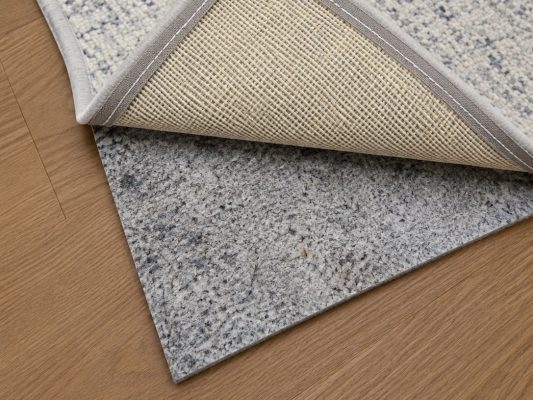
If you’ve ever bought a rug and thrown it straight onto the floor, you’ve probably noticed the problems that show up a few months later: the corners curl, it slides every time someone walks across it, or you start seeing wear marks on the floor underneath. A rug pad solves all three of these — but only if you pick the right one. Not every pad works with every floor, and “one thickness fits all” isn’t really a thing.
Here’s what actually matters when you’re choosing one.
Start With Your Floor Type
The floor underneath your rug determines more about pad selection than anything else.
Hardwood floors need a pad that grips the rug without gripping — or damaging — the wood finish. Rubber-backed pads with certain adhesives can discolor or haze hardwood over time, so look for pads specifically labeled safe for hardwood, usually a natural rubber or felt-and-rubber combination without solvents.
Carpet-on-carpet situations (a rug over wall-to-wall carpet) call for a different approach entirely. You’re not worried about floor damage here — you’re worried about the rug migrating or bunching up as foot traffic pushes it around. A grippier, low-profile pad usually works best so the rug doesn’t sit unnaturally high on top of the carpet pile.
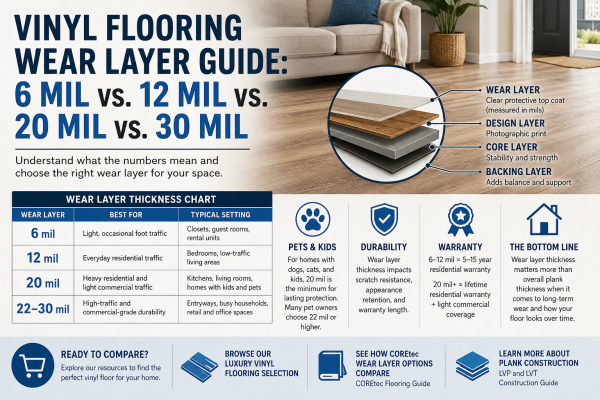
LVP and other resilient flooring is its own category. Some rubber-backed pads can react with the plasticizers in vinyl flooring and cause staining or discoloration over time — a known issue that trips up a lot of homeowners. If you’re working with COREtec or another LVP product, confirm the pad is explicitly rated safe for luxury vinyl before buying.
Pick a Material Based on What You Need
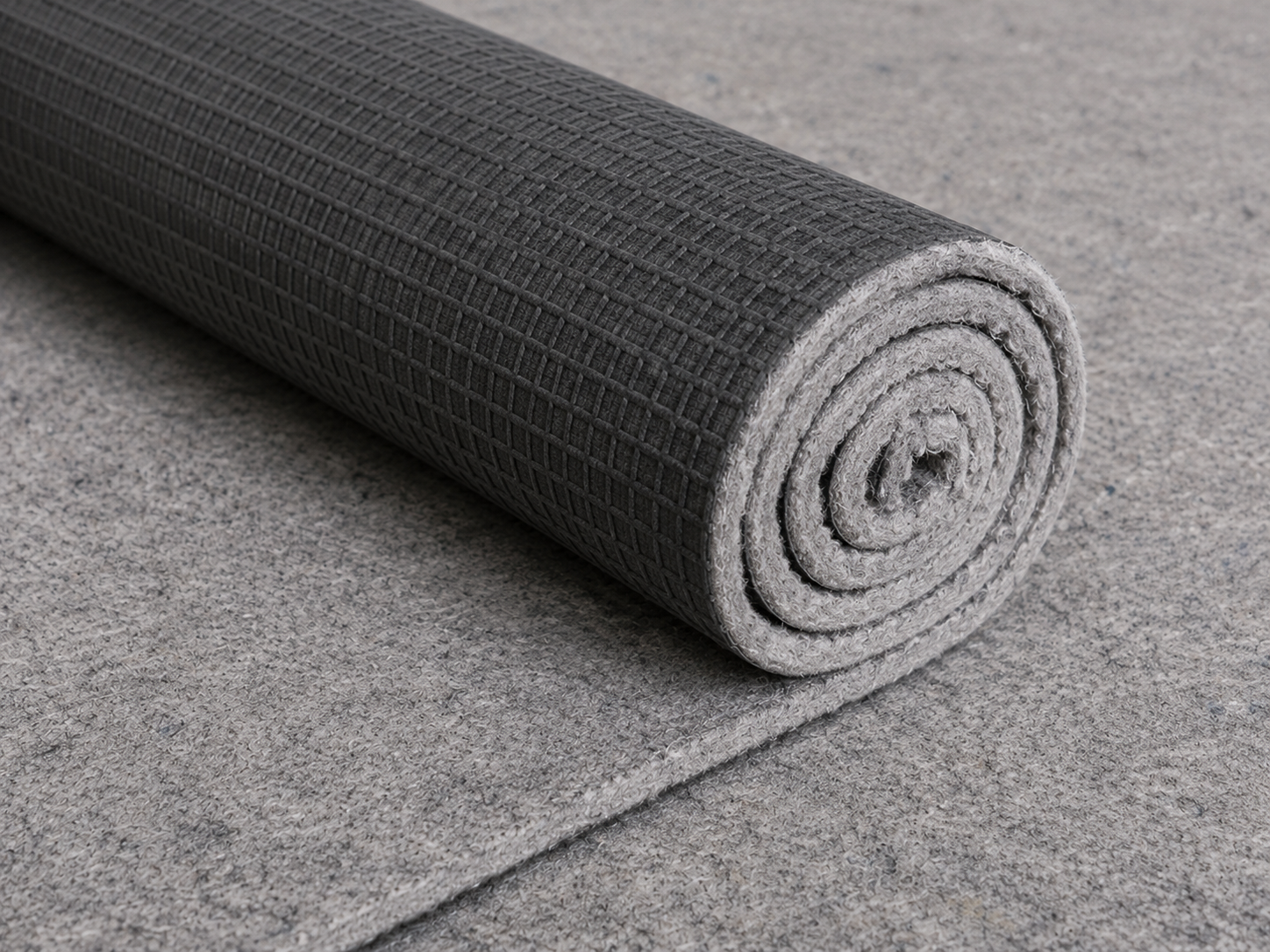
Felt pads are the most versatile option on the market, which is part of why they’re also one of the most searched. Dense felt (look for pads in the 7mm–10mm range) adds cushioning and a bit of insulation, and it’s a safe bet across almost any hard floor surface. Felt alone doesn’t grip aggressively, though, so if slipping is your main concern, you’ll want a felt-and-rubber combination pad instead.
Non-slip / rubber pads are built specifically to stop movement. These use natural or synthetic rubber, sometimes in a grid or waffle pattern, to create friction against both the floor and the rug backing. They’re the right call for high-traffic areas, entryways, or any spot where a rug sliding is a tripping hazard.
Felt-rubber hybrids combine both — felt on top for cushion, rubber on the bottom for grip. For most living rooms and bedrooms, this is the pad that checks every box: comfort underfoot, floor protection, and enough hold that the rug stays put.
Get the Thickness Right
Thickness isn’t just about comfort — it affects how the rug lies, how doors clear it, and how long it holds up.
- 1/8″ (thin): Best under furniture or in doorways where you need minimal height added.
- 1/4″ (standard): The most common choice for living rooms and bedrooms — enough cushion without creating a lip that catches your foot.
- 3/8″–1/2″ (thick): Adds noticeable plushness and extra insulation, but check door clearance and furniture stability before going this thick, especially in rooms with chairs that get pushed in and out often.
Size It Properly
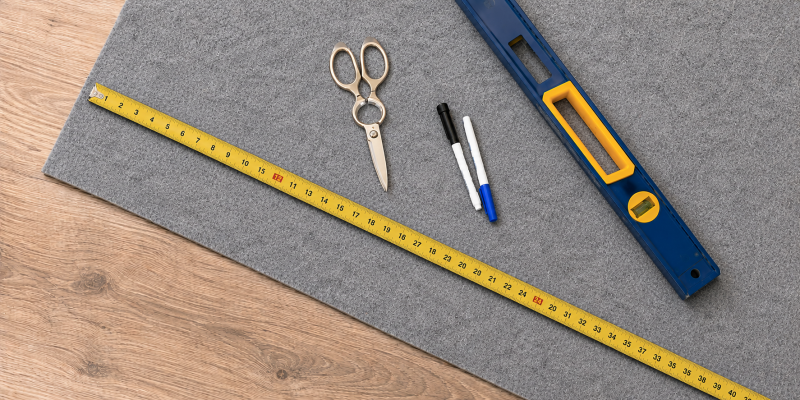
A rug pad should sit about 1 inch smaller than the rug on all sides. If the pad is cut exactly to the rug’s dimensions (or larger), it tends to peek out from underneath and becomes a visible — and trippable — edge. This is one of the most common mistakes people make buying pads off the shelf, since most pre-cut pads only come in a handful of standard sizes that rarely match a rug exactly.
When Off-the-Shelf Doesn’t Fit
Rugs come in a lot of odd sizes — runners, custom shapes, stair treads — and standard pad sizing doesn’t always keep up. If you’re dealing with a non-standard rug, a custom-cut pad sized to your exact dimensions (with that 1-inch inset built in automatically) saves you the trouble of trimming a pad by hand or living with edges that don’t line up.
That’s exactly what we built Dalton Rug Pad for — enter your rug’s dimensions, choose your thickness and material, and get a pad cut to fit. It’s a natural next step if you’re already working with us on flooring and want the rug on top to be protected and properly finished.
Looking for flooring that pairs well with the right pad underneath? Browse our COREtec collection or explore wool carpet options for a full room refresh.